


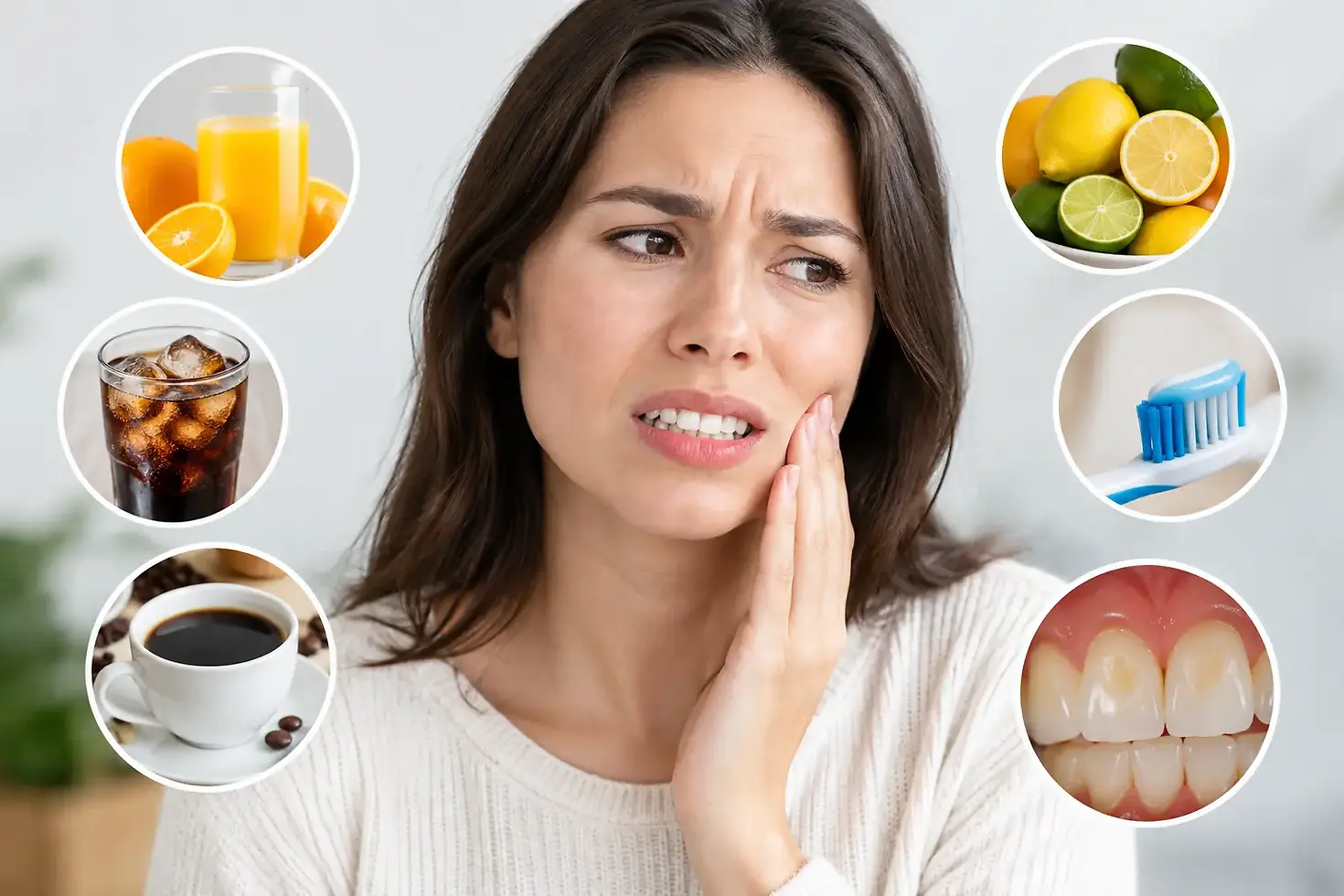
What Causes Tooth Erosion? Common Triggers
A tooth can look clean and healthy yet be gradually losing its protective outer layer. That is the challenge with erosion: it often develops quietly, long before sensitivity, yellowing or chipped edges become obvious. Understanding what causes tooth erosion gives you a genuine opportunity to protect your smile before more extensive dental treatment is needed.
Tooth erosion is not simply a matter of poor brushing. It is chemical wear caused when acids soften and dissolve enamel, the hard outer coating of the tooth. Once enamel has been lost, the body cannot grow it back. A dentist can protect and restore worn teeth, but prevention remains the most conservative and cost-effective approach.
What causes tooth erosion?
The immediate cause is repeated contact with acid. The source may be external, such as food and drinks, or internal, such as stomach acid reaching the mouth. How often acid reaches your teeth usually matters more than one isolated acidic meal.
After an acidic drink or snack, enamel temporarily softens. Saliva works to neutralise the acid and help the tooth surface recover. When acidic exposure happens repeatedly through the day, saliva has less time to do that job. Over months or years, the enamel can become thinner and weaker.
Acidic drinks and frequent sipping
Soft drinks, energy drinks, sports drinks, fruit juice, kombucha, flavoured sparkling water and some alcoholic drinks can all contribute to erosion. Even sugar-free soft drink can be highly acidic. Sugar-free does reduce the risk of tooth decay from sugar, but it does not make the drink harmless for enamel.
The pattern of drinking is critical. Finishing an acidic drink with a meal is generally less damaging than sipping it slowly at your desk, in the car or during sport over several hours. Each sip restarts the acid challenge. Water is the best everyday drink for both teeth and hydration.
Lemon water is another common surprise. It may feel like a healthy morning routine, but regularly bathing teeth in lemon juice can soften enamel. This does not mean you must never have it. It means frequency, concentration and timing deserve consideration.
Foods that are naturally acidic
Citrus fruits, tomatoes, vinegar-based dressings, pickles and sour lollies can all expose teeth to acid. These foods can still have a place in a balanced diet. The goal is not to eliminate every acidic food, but to avoid grazing on them all day and to have them as part of a meal where possible.
Chewy sour lollies deserve particular caution because they combine high acidity with sugar and can cling to the teeth. That creates conditions for both erosion and decay.
Reflux, vomiting and other internal acids
Gastro-oesophageal reflux, often called reflux or GORD, is a significant cause of tooth erosion. Stomach acid is much stronger than most dietary acids, and reflux can happen at night without obvious heartburn. Dentists may notice smooth wear on the inner surfaces of teeth, especially upper front teeth, before a patient realises reflux is affecting their mouth.
Frequent vomiting, whether linked to illness, pregnancy or another health condition, can also expose enamel to powerful acid. This is a health issue, not a question of blame. If this applies to you, a dentist and GP can help you manage the oral effects while addressing the underlying cause appropriately.
Dry mouth and reduced saliva protection
Saliva is one of the mouth's main defences. It dilutes acids, helps neutralise pH changes and supplies minerals that support enamel recovery after everyday acid exposure. When saliva flow is reduced, teeth become more vulnerable.
Dry mouth can be associated with dehydration, mouth breathing, smoking or vaping, some medications, medical conditions and certain cancer treatments. It can also be more noticeable overnight. If your mouth often feels sticky, you wake thirsty, or you need water to swallow dry foods, mention it at your dental visit. The right strategy depends on why the dryness is occurring.
Brushing at the wrong time
Brushing is essential, but vigorous brushing immediately after acidic food, drinks, reflux or vomiting can wear away softened enamel more quickly. This is an easy trap for people who are trying to look after their teeth.
Instead, rinse your mouth with plain water and wait around 30 minutes before brushing. Use a soft toothbrush, a fluoride toothpaste and gentle pressure. Scrubbing harder does not clean better, and it can worsen wear near the gumline.
Tooth erosion is different from tooth decay and grinding
These problems can occur together, but they are not the same. Tooth decay is driven by plaque bacteria using sugars and producing acid in specific areas, eventually creating holes or cavities. Erosion is direct acid dissolution across broader tooth surfaces.
Tooth grinding, also called bruxism, is mechanical wear caused by force and friction. A person who grinds may develop flat, shortened teeth, while erosion often creates smooth, cupped or hollowed areas. When acid-softened enamel is also exposed to grinding, wear can progress faster. This is why an accurate dental assessment matters - treating only one cause may not protect the teeth fully.
Signs your enamel may be wearing away
Early erosion is easy to miss. Teeth may look unusually shiny, feel sensitive to cold drinks, or appear slightly more yellow as the dentine beneath the enamel becomes visible. As wear advances, front teeth can become thinner or more translucent at the edges, and fillings may look raised because the surrounding tooth surface has worn down.
Some people notice small chips, rough edges, or changes in the way their teeth meet. Others feel discomfort when eating sweet, hot or cold foods. Sensitivity is not always erosion, but it is a good reason to arrange a dental examination rather than relying on a whitening or sensitivity product alone.
Practical ways to protect teeth from acid wear
Small changes can substantially reduce ongoing acid exposure. Aim to have acidic foods and drinks with main meals rather than continually between meals. Choose tap water as your default drink, and if you do have an acidic beverage, avoid swishing it around your mouth or holding it before swallowing.
A straw may reduce contact with front teeth for some drinks, although it is not a complete solution and does not make frequent soft drink consumption safe for enamel. Rinsing with water afterwards is more helpful than brushing straight away.
Maintain twice-daily brushing with fluoride toothpaste, clean between teeth as advised by your dentist, and keep regular dental checks. For patients at higher risk, a dentist may recommend a higher-fluoride product, protective treatments or a custom night splint where grinding is contributing. These choices should be tailored to your teeth, habits and medical history.
How dentists manage tooth erosion
The first priority is identifying the cause and slowing further wear. Your dentist may assess the pattern of enamel loss, review diet and dry-mouth symptoms, ask about reflux, and compare photographs or scans over time. This helps distinguish a stable issue from active progression.
If erosion is mild, preventive care and monitoring may be all that is required. Where sensitivity, chips or loss of tooth shape are affecting comfort or appearance, conservative bonding can rebuild worn areas. More extensive wear may require ceramic restorations such as crowns or CEREC restorations to restore strength, function and a natural-looking smile.
The right treatment is not always the most extensive one. Preserving as much healthy tooth structure as possible is central to quality care. At Master Dental in Dee Why, patients can be assessed with a focus on comfort, clear planning and conservative options before moving to restorative treatment.
If your teeth feel more sensitive, look thinner, or seem to be changing shape, do not wait for pain to become severe. An early examination can identify the source of wear and give you practical steps to protect the enamel you still have.