


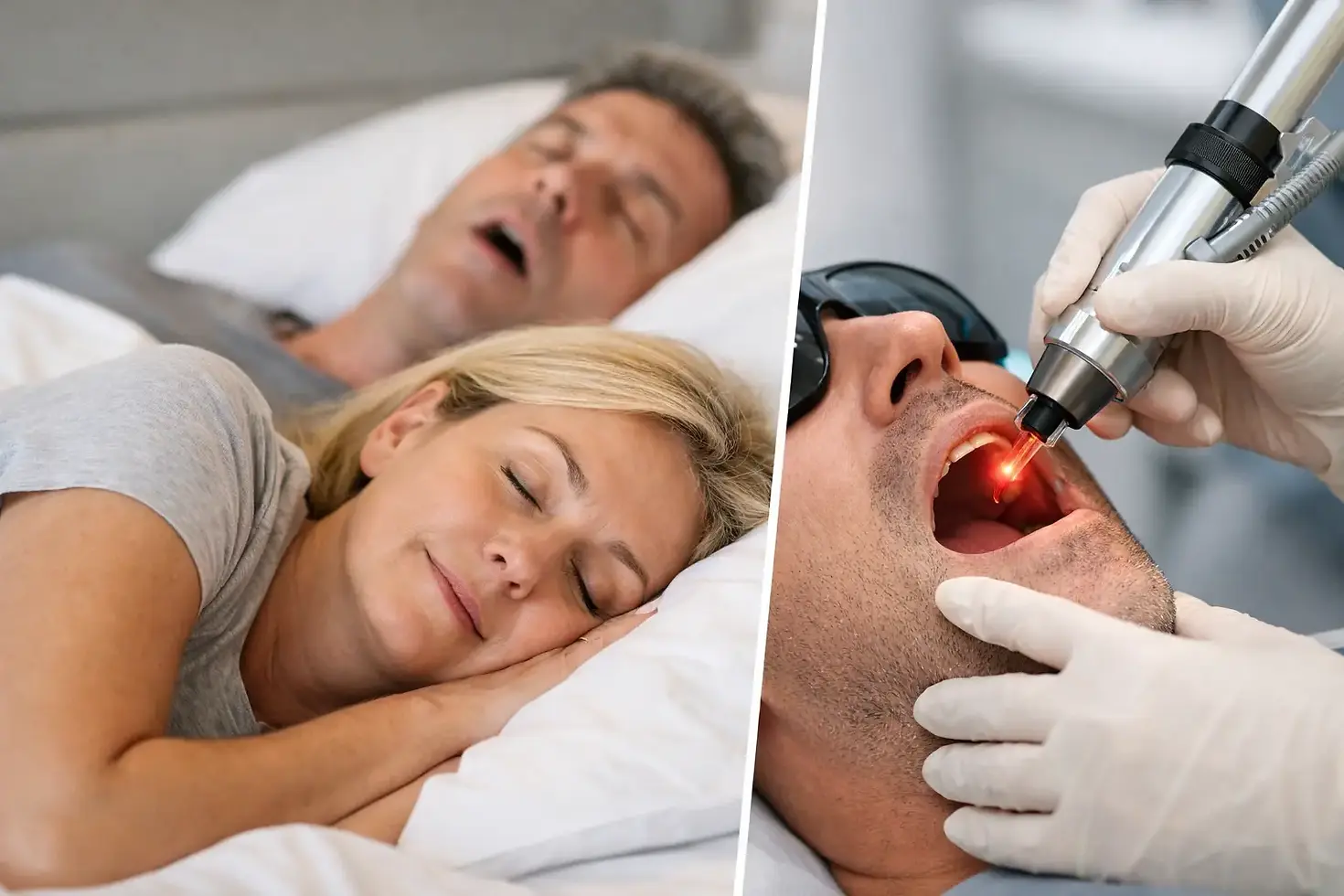
How NightLase Helps Snoring Without Surgery
A partner nudging you awake, a child covering their ears, or another morning spent feeling as though you barely slept can make snoring much more than a nighttime annoyance. Understanding how NightLase helps snoring starts with identifying where the sound is coming from. For suitable patients, this gentle laser treatment may reduce snoring by improving the firmness of soft tissues in the mouth and throat - without surgery, needles or a lengthy recovery.
At Master Dental in Dee Why, we use advanced laser technology with a strong focus on comfort and careful assessment. NightLase can be an appealing option for Northern Beaches patients who want to explore a non-invasive approach, but it is not a substitute for investigating possible sleep apnoea.
Why snoring happens in the first place
Snoring occurs when airflow becomes restricted during sleep and causes relaxed soft tissues to vibrate. The tongue, soft palate, uvula and sides of the throat can all contribute. As the airway narrows, the movement of air becomes more turbulent, creating the familiar sound.
Many factors can make snoring more likely. Nasal congestion, alcohol in the evening, sleeping on your back, weight changes and natural age-related soft tissue laxity can all play a part. Jaw position and the shape of the oral airway may also influence the problem. That is why there is no single snoring solution that works for everyone.
For some people, the main issue is a soft palate that relaxes and vibrates excessively. This is the area NightLase is designed to address. If snoring is largely caused by blocked nasal passages, enlarged tonsils, significant weight-related airway narrowing or another medical issue, different treatment may be more appropriate.
How NightLase helps snoring
NightLase is a laser treatment that works on the soft tissues at the back of the mouth and throat. Using controlled laser energy, the treatment gently heats the tissue in a carefully targeted way. This stimulates collagen and can encourage tissue tightening and remodelling over time.
The aim is to make the soft palate and surrounding tissues firmer, so they are less likely to flutter in the airway while you sleep. With less vibration, snoring may become quieter or occur less often. Some patients also report a more settled night for themselves and the person sleeping beside them.
The treatment is performed in the dental chair. There are no incisions, no stitches and usually no need for local anaesthetic. Most people describe a warm sensation rather than pain. Sessions are relatively short, making NightLase practical for busy patients who do not want the downtime associated with surgical procedures.
It is worth being clear about expectations: NightLase is not an instant mechanical fix. Collagen changes develop gradually, and the response varies from person to person. A course of treatment is commonly recommended, with sessions spaced over several weeks. Your dentist will advise on a suitable schedule after assessing your mouth, airway and health history.
What happens during a NightLase appointment?
Before treatment, your dentist will discuss your snoring pattern, general health and any symptoms that could indicate a more serious sleep-breathing condition. They will examine the mouth and throat to determine whether the soft palate appears likely to be contributing.
During the appointment, protective eyewear is worn and the laser is moved over specific areas, usually including the soft palate, uvula and parts of the tongue or throat where appropriate. The process is precise and controlled. Because there is no cutting, patients can generally return to normal daily activities straight after their visit.
You may notice mild warmth or temporary tenderness in the treated area. Staying well hydrated and following the individual aftercare advice provided by your dentist can help you remain comfortable. Most patients do not require time away from work or family commitments.
The advantages of a non-surgical snoring treatment
For the right candidate, NightLase offers a number of practical benefits. It is minimally invasive, does not involve needles or surgical removal of tissue, and avoids the recovery period that can accompany more invasive throat procedures. This can make it less daunting for people who have delayed seeking help because they are anxious about treatment.
It is also a treatment delivered in a familiar clinical setting, with an experienced dental team focused on oral structures and patient comfort. Advanced dental laser technology allows a highly targeted approach to the tissues involved.
That said, convenience should never outweigh proper assessment. Snoring is common, but it can sometimes be a sign of obstructive sleep apnoea. A responsible approach is to identify when laser treatment may be helpful and when medical investigation needs to come first.
NightLase and sleep apnoea: an important distinction
Loud snoring does not automatically mean sleep apnoea, and not everyone with sleep apnoea snores loudly. Obstructive sleep apnoea involves repeated partial or complete airway collapse during sleep. These episodes can reduce oxygen levels and repeatedly disturb sleep, even if the person does not remember waking.
Signs that warrant discussion with your GP or a sleep physician include witnessed pauses in breathing, gasping or choking at night, severe daytime tiredness, morning headaches, poor concentration, high blood pressure or falling asleep unintentionally during the day. These symptoms deserve proper investigation rather than a cosmetic or convenience-focused solution.
NightLase is not a replacement for medical diagnosis, CPAP therapy or other treatment prescribed for obstructive sleep apnoea. If a sleep study identifies sleep apnoea, your medical team can advise on the safest treatment pathway. In some cases, a dentist may also have a role in providing a custom oral appliance, but this should be based on appropriate diagnosis and coordinated care.
Who may be suited to NightLase treatment?
NightLase may suit adults with primary snoring linked to laxity or vibration of the soft palate and related tissues. It can be particularly attractive for people looking for a conservative option before considering more invasive measures.
A consultation is essential because suitability depends on the cause of the snoring, anatomy, medical history and whether sleep apnoea is suspected. Patients with certain health conditions, active oral infections or other clinical concerns may need treatment delayed, modified or referred elsewhere. Honest assessment protects both your comfort and your result.
Lifestyle measures can also make a real difference. Avoiding alcohol close to bedtime, addressing persistent nasal congestion, maintaining a healthy weight where relevant and changing sleep position may reduce snoring for some people. NightLase can form part of a broader plan rather than being viewed as the only answer.
What results can you expect?
The goal of NightLase is a meaningful reduction in snoring for appropriately selected patients, not a guaranteed cure. Some people notice improvement during their treatment course, while others find that changes become clearer after the tissues have had time to remodel. The degree and duration of benefit differ between individuals.
Follow-up care matters. Your dentist can review your response, discuss whether maintenance treatment may be useful and check for any changes in your symptoms. If snoring persists, worsens or is accompanied by daytime fatigue or breathing pauses, further medical assessment is the sensible next step.
For couples and families, quieter nights can have a substantial effect on sleep quality, mood and daily energy. The right starting point is not simply choosing the newest treatment. It is finding out why the snoring is happening, then selecting care that is safe, comfortable and suited to you.
If snoring is disrupting your household, a NightLase consultation can help clarify whether your oral tissues are contributing and whether this gentle laser option is appropriate. A careful assessment gives you a clearer path towards quieter, more restful nights.