


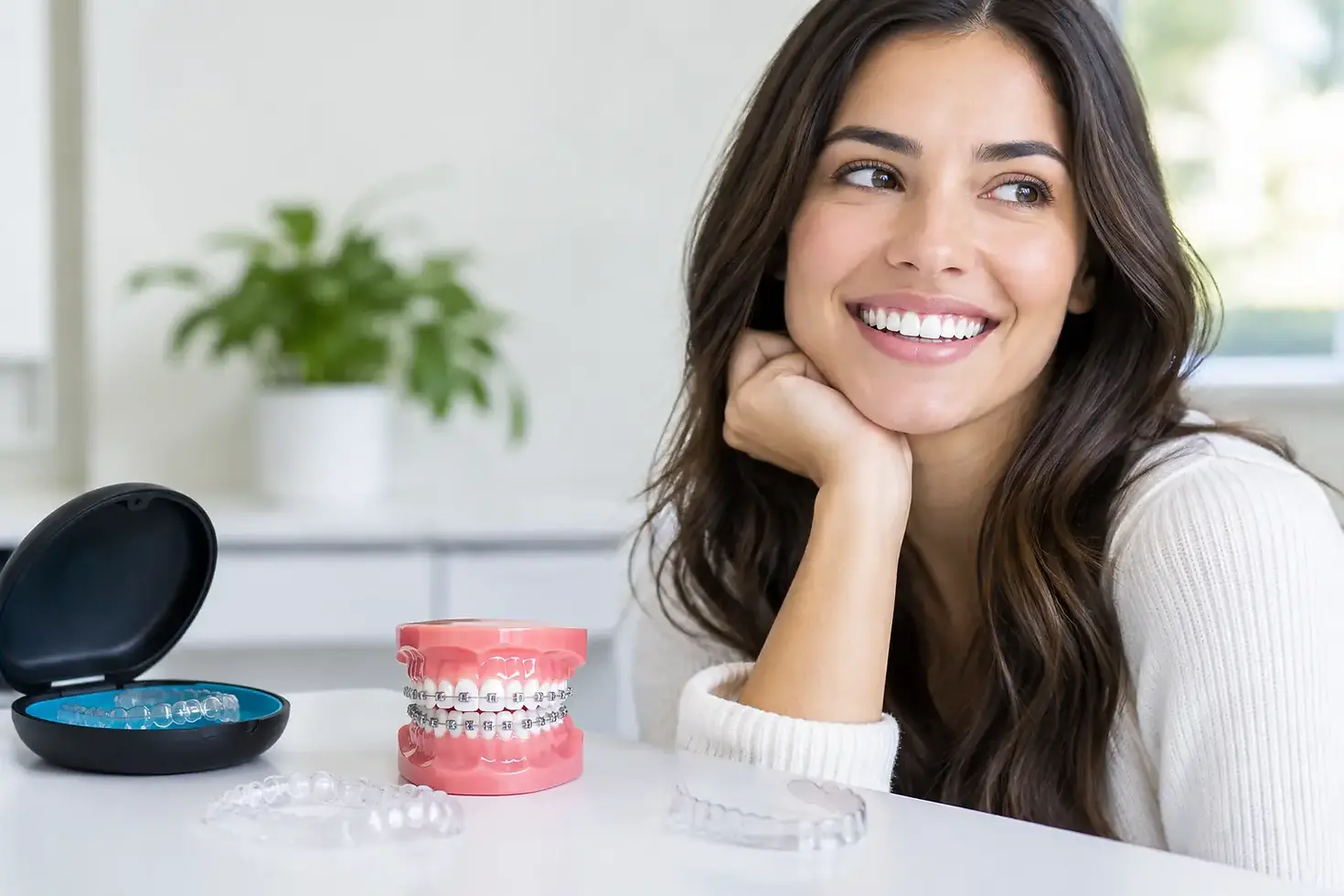
Invisalign Alternatives That May Suit You
A clear aligner treatment can look appealing when you want straighter teeth without the appearance of fixed braces. However, Invisalign is not the only option. The best Invisalign alternatives depend on how your teeth bite together, how much movement is needed, your daily routine and the result you want to achieve.
For patients across Dee Why and the Northern Beaches, the right orthodontic choice is rarely about choosing the most heavily advertised name. It is about having a careful clinical assessment, a clear treatment plan and a solution that suits your smile for the long term.
What are the main Invisalign alternatives?
Clear aligners remain a popular option for adults because they are discreet and removable. Yet they are only one way to straighten teeth. Fixed braces, Fastbraces and, in selected cosmetic cases, restorative dentistry can each offer a better path depending on the concern being treated.
A consultation should look beyond whether teeth appear crowded or uneven at the front. Your dentist also needs to assess the bite, gum health, jaw function, tooth roots and available space. Moving teeth without addressing these factors can compromise comfort, stability or the final result.
Other clear aligner systems
Invisalign is a recognised brand of clear aligners, but it is not the only system available. Other professionally supervised aligner systems use a series of custom-made, removable trays to gradually guide teeth into position.
For the right patient, the experience can be very similar: digital planning, clear trays worn for most of the day, regular progress checks and retainers after treatment. Some systems may be more suitable for straightforward alignment, while others can be planned for more complex movement using attachments, tooth shaping or elastics.
The key distinction is not simply the logo on the packet. It is the diagnosis, the precision of the treatment plan and the clinician monitoring how your teeth respond. Clear aligners require discipline too. They generally need to be worn around 20 to 22 hours each day, and leaving them out frequently can extend treatment or reduce accuracy.
Traditional fixed braces
Fixed braces are still one of the most reliable orthodontic treatments available. Brackets are bonded to the teeth and connected with an archwire, allowing controlled movement that does not rely on remembering to wear aligners.
They are especially useful when teeth need significant rotation, vertical movement, bite correction or more complex space management. Modern braces are smaller and more refined than many adults remember, and ceramic bracket options can make them less noticeable.
The trade-off is visibility and cleaning. Food can collect around brackets and wires, so brushing technique and regular hygiene appointments matter. There are also dietary restrictions, as hard or sticky foods can damage the appliance. For patients who know they will struggle to wear removable aligners consistently, fixed braces can be the more predictable choice.
Fastbraces
Fastbraces is another fixed-brace approach that may be considered for suitable cases. It uses a particular bracket and wire design intended to begin moving the crown and root of a tooth earlier in treatment.
For some patients with mild to moderate alignment concerns, this may offer a more efficient pathway than conventional braces. It is not a shortcut for every orthodontic problem, however. Complex bite correction, severe crowding and skeletal jaw differences still require careful planning, and treatment time varies considerably from person to person.
At Master Dental, orthodontic planning is approached with the same care as cosmetic and restorative treatment: the aim is not simply to make teeth look straighter in photographs, but to create a healthy, stable bite that feels right day to day.
Cosmetic bonding, veneers and crowns
When the concern is limited to the visible shape, proportion or edge position of one or two teeth, cosmetic bonding or porcelain restorations may sometimes be discussed. These treatments can improve the appearance of minor gaps, chips or uneven edges without moving teeth orthodontically.
They are not direct substitutes for orthodontics when there is crowding or a bite issue. Building up a tooth that is significantly out of position can require unnecessary removal of healthy tooth structure or create an over-contoured result that is harder to clean. A conservative approach may involve small amounts of alignment first, followed by bonding or whitening to refine the final smile.
How to choose between Invisalign alternatives
The most suitable treatment starts with the problem you are solving. If your teeth are slightly crowded but your bite is stable, clear aligners may be a discreet and convenient option. If your upper and lower teeth do not meet properly, or several teeth need more demanding movement, fixed braces may provide greater control.
Lifestyle deserves an honest place in the decision. Clear aligners can be removed for meals, special occasions and brushing, which many busy professionals value. But every removal creates an opportunity not to put them back in. Fixed braces stay at work around the clock, although they ask more of your cleaning routine and food choices.
Appearance is relevant, but it should not be the only deciding factor. Tooth movement is a biological process. The most attractive appliance is not necessarily the most efficient or clinically appropriate one for your teeth.
Treatment time is individual
You may see claims that one treatment is faster than another. In reality, treatment duration depends on the amount and type of movement required, your biology, appliance wear and how closely appointments and instructions are followed.
Minor cosmetic alignment may take months. More comprehensive orthodontic treatment commonly takes longer, particularly where bite correction is required. A reliable clinician will explain what can realistically be achieved, rather than promising an unusually quick result before examining you properly.
Costs in Australia
Orthodontic fees vary with the complexity of the case, the appliance selected, diagnostic records, review appointments and retainer requirements. As a broad Australian guide, professionally managed clear aligner or fixed-brace treatment may range from several thousand dollars for limited correction to $8,000 or more for comprehensive treatment.
A lower initial figure is not always the better value if it excludes refinements, retention or the level of monitoring your case needs. Ask for a written treatment plan that explains what is included, expected timing, review visits and the likely cost of retainers. Your teeth can continue to shift after active treatment, so retention is an essential part of any investment in orthodontics.
Why professional supervision matters
At-home orthodontic products can seem convenient, but moving teeth without in-person examination and ongoing clinical oversight carries real limitations. Teeth do not move in isolation. Gum health, bone levels, tooth roots, existing fillings and the bite all influence whether orthodontic treatment is appropriate and how it should be delivered.
A professional assessment can identify decay, gum inflammation, tooth wear or bite problems that need attention before alignment begins. Digital scans and photographs help create a detailed plan, while regular reviews allow the clinician to check tracking, make adjustments and address concerns early.
This matters particularly for adults. Many adults have previous dental work, gum recession, missing teeth or a history of grinding. These issues do not automatically rule out aligners or braces, but they can change the safest sequence of treatment.
Questions worth asking at your consultation
Before committing to any orthodontic option, ask what movements are planned and whether your bite will change. Find out how long active treatment is expected to take, what daily care is required and whether refinements are likely. You should also understand what happens if an attachment comes off, a brace wire breaks or an aligner is lost.
It is also sensible to ask about retention from the beginning. Fixed retainers, removable retainers or a combination may be recommended depending on your case. Wearing retainers as directed is what protects the result once teeth have reached their new positions.
The right alternative to Invisalign is the treatment that respects your teeth, your bite and your ability to follow the plan. A considered in-person assessment can turn a confusing choice into a clear next step towards a straighter, healthier-looking smile.