


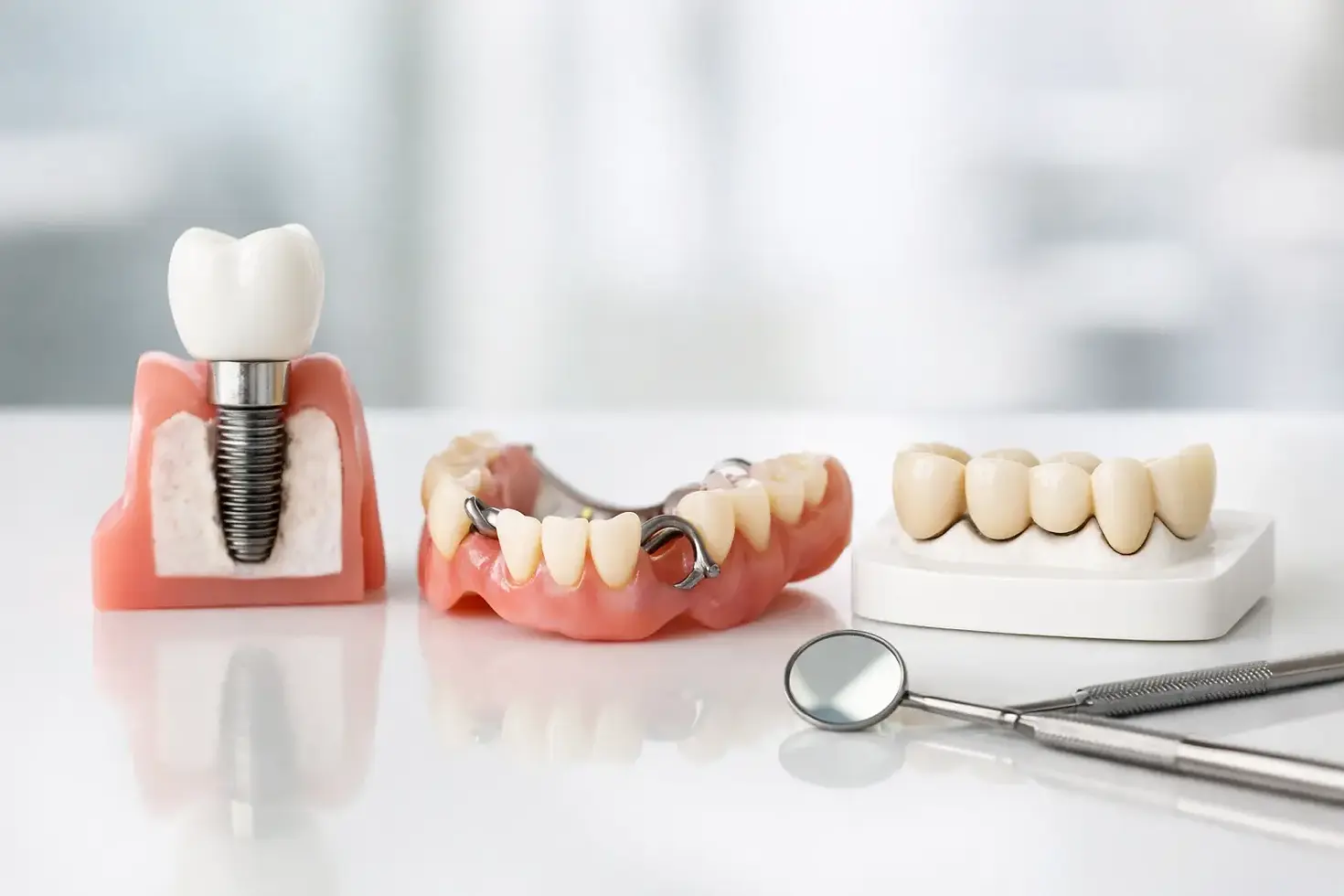
Best Options for Replacing Missing Teeth
A missing tooth can change more than a smile. It may make chewing awkward, affect speech, allow nearby teeth to drift, and leave you feeling less confident in photographs or conversation. The best options for replacing missing teeth depend on where the gap is, how many teeth are missing, the health of your gums and jawbone, and the outcome you want over the long term.
For some people, a simple replacement is the right practical choice. For others, a dental implant offers the closest result to having a natural tooth again. A careful assessment is the starting point, because the right treatment should protect your bite as well as improve appearance.
Why replacing a missing tooth matters
When a tooth is lost, the surrounding teeth can gradually tip or move into the open space. This can alter the way your top and bottom teeth meet, making them harder to clean and placing extra pressure on certain teeth when you bite. If the missing tooth is towards the back, you may begin favouring one side while chewing without realising it.
There is also a change beneath the gum. The jawbone normally receives stimulation from a tooth root during chewing. Once that root is gone, bone in that area can reduce over time. This is one reason dental implants are often considered the most comprehensive replacement option: they replace both the visible tooth and its root structure.
That said, treatment is not one-size-fits-all. Timing, health considerations, budget and personal preferences all matter. An experienced dentist can explain the trade-offs clearly before you commit to any procedure.
Best options for replacing missing teeth
Dental implants
A dental implant is a small biocompatible post placed in the jawbone to act as an artificial tooth root. Once it has integrated with the bone, it can support a custom-made crown. For several missing teeth, implants may also support a bridge. A full arch can sometimes be restored using a strategically planned number of implants and a fixed full-arch bridge.
For a single missing tooth, an implant and crown is often the closest alternative to a natural tooth. It does not rely on neighbouring teeth for support, so those teeth generally do not need to be filed down. It is fixed in place, feels stable when chewing, and can be designed to blend naturally with the surrounding teeth.
Implant treatment takes planning and patience. Some patients need gum treatment, a bone graft or a healing period before their final crown is fitted. The overall cost is typically higher upfront than other options, but implants can offer excellent long-term value when they are properly planned, restored and maintained. In Australia, the cost varies considerably according to the complexity of surgery, imaging, grafting requirements and the type of final restoration.
Implants are not automatically suitable for everyone. Active gum disease, insufficient bone, smoking, certain medical conditions and poor oral hygiene can affect treatment planning and success. These factors do not always rule out implants, but they need to be addressed honestly.
Fixed dental bridges
A conventional dental bridge fills a gap by attaching a replacement tooth to crowns placed over the teeth on either side. It is fixed in place, which appeals to patients who want a secure solution without removable components. Bridges can be a very effective option when the neighbouring teeth already need crowns because of large fillings, cracks or previous treatment.
The main compromise is that supporting teeth usually need to be prepared to hold the bridge. If those teeth are healthy and untouched, an implant may be more conservative because it replaces the missing tooth independently. On the other hand, a bridge may be completed sooner than an implant and does not require surgical placement in the jaw.
A well-made bridge should be carefully shaped to clean around and beneath it. Daily home care is essential, including the right interdental cleaning technique, because plaque can accumulate around the supporting teeth. Regular professional checks help identify issues early.
Resin-bonded bridges
A resin-bonded bridge, sometimes called a Maryland bridge, is usually used to replace a front tooth. It has a replacement tooth attached to a thin wing that is bonded behind an adjacent tooth, often with little or no drilling required.
This can be a conservative and attractive choice for the right patient, particularly where the neighbouring teeth are healthy. It may also be used as an interim solution while a younger patient waits for jaw growth to finish before considering an implant.
However, resin-bonded bridges are not designed for every bite or every location. They can debond, especially where there is a heavy bite, tooth grinding or limited bonding surface. They are generally better suited to carefully selected front-tooth cases than to replacing back teeth that receive stronger chewing forces.
Partial dentures
A partial denture is a removable appliance that replaces one or more missing teeth. It may be made from acrylic, flexible material or a metal framework, depending on the design and clinical needs. Partial dentures can replace several teeth efficiently and are often a practical option where fixed treatment is not appropriate.
Modern dentures can look far more natural than many people expect, particularly when they are professionally designed around facial support, tooth shade and bite. They are removable for cleaning, and they can usually be adjusted or added to if further teeth are lost.
The adjustment period is real. A denture can initially feel bulky, and it may move slightly when eating or speaking. Stability depends on the shape of the gums, the number and position of remaining teeth, and the quality of the fit. Implant-supported solutions may be considered when improved retention is needed.
Complete dentures and implant-supported dentures
When all teeth in an arch are missing, a complete denture can restore appearance and the ability to chew. Conventional dentures sit over the gums and are removable. They remain an important treatment option, especially when surgery is not suitable or a patient prefers a non-surgical approach.
The lower jaw can be particularly challenging because a lower denture has less surface area for suction and must coexist with the tongue and moving muscles of the mouth. Dental implants can dramatically improve stability by retaining a removable denture with secure attachments. For suitable patients, a fixed implant-supported bridge may provide an even more stable alternative.
The best choice comes down to bone availability, expectations, hygiene ability, treatment time and budget. A removable implant-retained denture can be an excellent middle ground between a conventional denture and a fixed full-arch restoration.
How to choose the right tooth replacement option
The most appropriate solution starts with a detailed examination, digital imaging and a discussion about your goals. The key questions are not only, “What can fill this gap?” but also, “What will keep the rest of my mouth healthy?” and “What can I realistically maintain?”
Consider the location of the missing tooth first. A front tooth usually raises appearance and speech concerns, while a missing molar affects chewing efficiency and can allow the bite to collapse over time. The number of missing teeth also matters. One isolated gap may suit an implant crown or bridge, while multiple gaps may be better managed with implant-supported bridges or a partial denture.
Your gum health is equally important. Bleeding gums, untreated infection or loose teeth should be addressed before major restorative work. The long-term success of any crown, bridge, denture or implant depends on a healthy foundation.
Finally, think beyond the initial treatment. An implant crown still needs daily brushing, interdental cleaning and regular reviews. Bridges need careful cleaning beneath the false tooth. Dentures require daily cleaning and occasional adjustment as gums and bone change. The option that works best is the one that suits both your mouth and your ability to care for it.
A comfortable, carefully planned path forward
Replacing a missing tooth should never feel like a rushed decision. At Master Dental in Dee Why, treatment planning can incorporate detailed diagnostics and modern technology to make care more precise and comfortable, whether you need a single crown, a bridge, dentures or implant treatment.
If a tooth has recently been lost, arranging an assessment sooner rather than later can preserve more options. The right replacement is not simply the one that closes the space today - it is the one that supports a healthy, confident smile for the years ahead.