


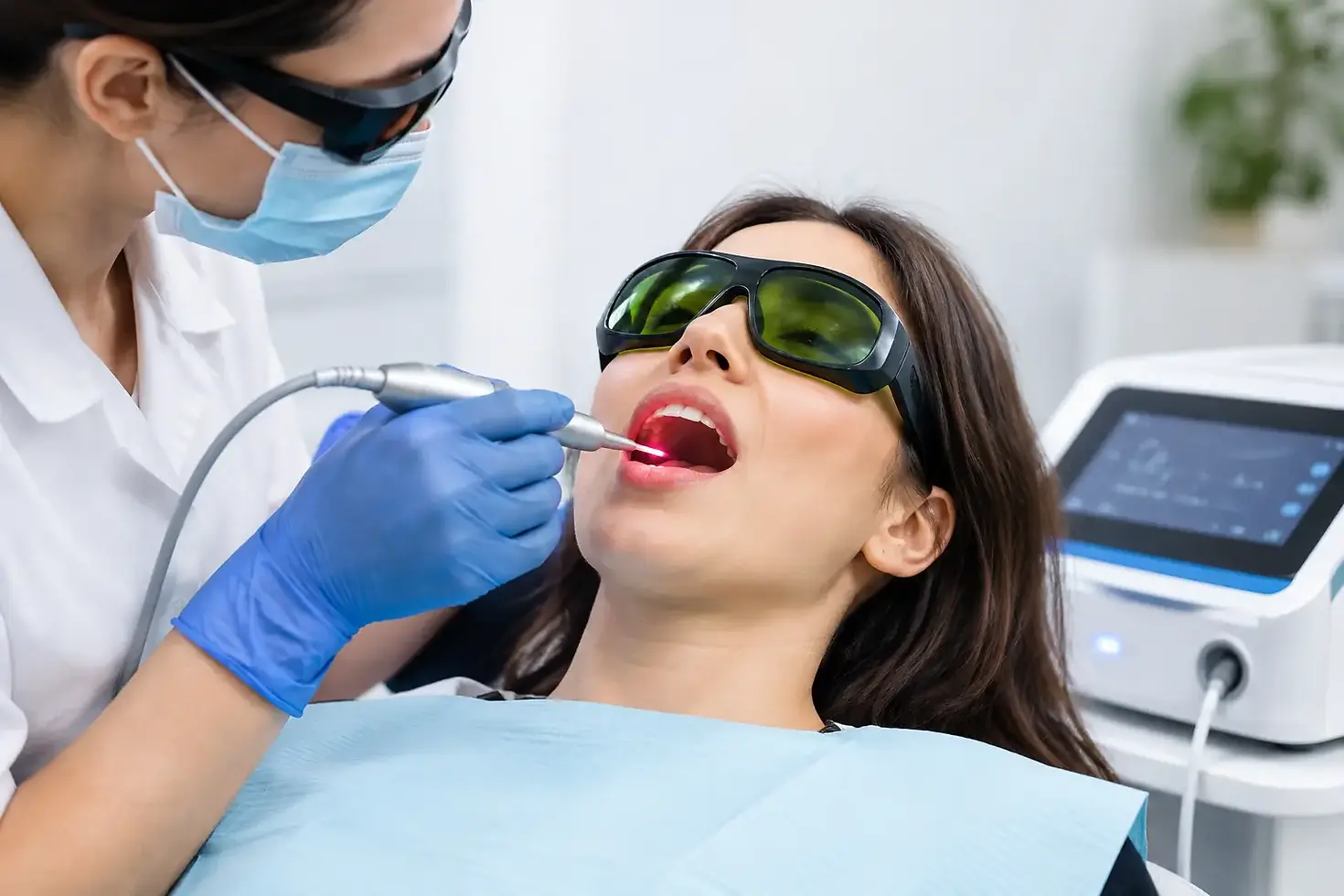
Laser Cavity Treatment Example and What to Expect
A laser cavity treatment example is often most useful for someone with a small area of decay who is anxious about the sound, vibration or injection commonly associated with a filling. Rather than relying solely on a conventional drill, a dental laser may gently remove decayed tooth material with focused light energy. For the right cavity, this can mean a quieter appointment, minimal removal of healthy tooth structure and, in some cases, no needle.
That does not mean every cavity can or should be treated by laser. The depth, location and type of decay matter. A proper clinical examination, often supported by X-rays, determines whether laser treatment is suitable and whether a conventional drill, local anaesthetic or another restorative approach will produce the safest long-term result.
A laser cavity treatment example in practice
Consider an adult patient who has noticed mild sensitivity when eating sweets on one of their back teeth. There is no severe toothache, no swelling and no visible fracture. During a check-up, the dentist identifies a small cavity in the chewing surface of a molar. An X-ray confirms that the decay is limited to the outer layers of the tooth and has not reached the nerve.
Because the decay is early and accessible, laser cavity treatment may be recommended. The tooth is isolated and kept dry, then the dentist uses an Er:YAG dental laser to carefully remove the softened, infected enamel and dentine. The laser works in short, controlled pulses, often with a fine spray of water to keep the tooth cool and clear the treatment area.
Many patients describe the sensation as light tapping or a faint popping sound, rather than the pressure and vibration of drilling. Sensitivity differs from person to person, so local anaesthetic remains available whenever it is needed. Comfort is always the priority, not a test of whether treatment can be completed without an injection.
Once the decay has been removed, the dentist checks that only healthy, firm tooth structure remains. The cavity is then restored with a tooth-coloured composite filling, shaped to suit the tooth’s natural bite and hardened with a curing light. After the filling is polished, the patient can usually return to normal daily activities straight away, taking care until any numbness has worn off if anaesthetic was used.
Why the laser approach can suit early decay
Dental lasers are designed for controlled treatment of hard and soft tissues. When used for a suitable cavity, the laser can target decayed tooth material precisely. This supports a minimal-intervention approach: preserve as much healthy enamel and dentine as possible while thoroughly removing decay before it progresses.
For nervous patients, the change in experience can be significant. The conventional drill’s high-pitched sound and vibration are common sources of dental anxiety. Laser treatment is often quieter and may involve less mechanical sensation. Some early cavities can be treated without local anaesthetic, although this is never guaranteed and should not be viewed as the only measure of a successful appointment.
A laser can also assist with cleaning and decontaminating the prepared area before restoration. That said, the skill of diagnosis, decay removal, isolation and filling placement remains central to the result. Advanced technology is valuable when it is used with sound clinical judgement, not as a one-size-fits-all replacement for established techniques.
When a laser may not be the best option
A deeper cavity close to the tooth nerve may still require local anaesthetic, regardless of the instrument used. If decay extends between teeth, beneath an existing large filling, or into an area that is difficult to access, a conventional handpiece may be more efficient or more appropriate. Teeth with extensive damage may need a larger restoration, a CEREC crown, root canal treatment or another tailored solution.
The same is true for very hard enamel or old restorative material. Lasers can be excellent for tooth decay, but they do not remove every material in the same way. Composite, amalgam and ceramic restorations may require conventional instruments for adjustment or removal. Your dentist will explain the method recommended for your tooth and why.
What happens before and after laser cavity treatment
The appointment begins as any quality dental examination should: with a clear diagnosis. Your dentist will examine the tooth, assess gum health and may take diagnostic X-rays to see how far the decay has travelled. Small cavities can look minor on the surface while extending further underneath, so treatment decisions should never be based on appearance alone.
If laser treatment is appropriate, the dentist will discuss the expected procedure, anaesthetic options and the type of filling planned. Patients should mention any history of dental anxiety, sensitivity, jaw discomfort or previous difficult appointments. This allows the team to pace the visit carefully and make comfort arrangements before treatment begins.
After a small laser filling, it is common to experience slight sensitivity to cold, heat or pressure for a short period. The tooth has been treated and restored, so it may need time to settle. Avoid testing it repeatedly with very cold drinks or hard foods on the day. If discomfort becomes stronger, lingers, or is accompanied by swelling, contact the clinic promptly for advice.
A filling is not a permanent shield against future decay. Daily brushing with fluoride toothpaste, cleaning between teeth and regular dental checks remain essential. In particular, cavities between teeth and around older fillings can develop quietly, without noticeable pain in the early stages.
Is laser cavity treatment worth considering?
For patients who avoid treatment because they fear drilling or injections, it can be an encouraging option. It may also appeal to those who value conservative dentistry and modern technology. The key benefit is not simply that a laser feels different. It is that the technology can allow precise treatment with a strong focus on preserving healthy tooth structure, when the clinical situation permits.
Cost varies according to the tooth involved, the size and complexity of the cavity, the type of filling and whether additional diagnostic or restorative work is required. The most useful question is not whether laser treatment is automatically cheaper or more expensive than a standard filling. It is whether it is the right technique for achieving a durable, comfortable result for your particular tooth.
At Master Dental in Dee Why, advanced laser dentistry is considered alongside the full range of restorative options. That means patients are not pushed towards a technology-led answer when a simpler treatment is better suited. The aim is precise care, clear advice and a result that supports the tooth for years to come.
If you have sensitivity, a visible dark spot, food trapping in one area or a filling that feels rough, arrange an assessment before the problem becomes painful. Early decay is often easier to treat, and a calm conversation about your options can make the next step feel far more manageable.